



MgcSTEM|PWM Choose Your Upgrade Solution
Compare Our Upgrade Solutions
Use this table to quickly compare the key features of cach solution and find the best fit for your needs.
| Solution | Input Voltage | Max Current | LVP | 2.5A 12V Port | Recommended Motor Models |
Forward & Reverse | Recommended Scenarios | Learn More Details |
| 1. Battery Replacement Solution— Buck Converter | 11-70V | Factory Default | × | × | Stock Motor | Factory Original | Stock Replacement Battery | Click to View |
| 2. Basic Performance Upgrade — PWM2.0A | 9-70V | Peak 35A, continuous 20A |
× | × | Stock Motor | Add Separate | Basic Speed Boost with Foot-Pedal Control | Click to View |
| 3. Advanced Upgrade Kit — PWM 2.0B | 9-70V | Peak 40A, continuous 30A |
√ | × | For 755 & Smaller Motors | Add Separate | More Power, Adjustable Start/Stop & Battery Protection | Click to View |
| 4. High-Speed Upgrade Kit — PWM 3.0 | 13-77.5V | Peak 120A, continuous 65A |
√ | √ | For 997, 895, 795, 775, 755 & Smaller Motors | Add Separate | Ideal for Racing or High-Performance Builds | Click to View |
| 5. Easy-Install High-Speed Kit — PWM3.0B | 13-77.5V | Peak 120A, continuous 65A |
√ | √ | For 997, 895, 795, 775, 755 & Smaller Motors | Built-In | Ideal for Racing, with No High-Current Shifter Required | Click to View |
| 6. Premium Remote-Control Upgrade — PWM4.0 | 13-77.5V | Peak 120A, continuous 65A |
√ | √ | For 997, 895, 795, 775, 755 & Smaller Motors | Built-In | Ideal for Racing, with Remote & Panel Control | Click to View |
① Battery Swap & Voltage Conversion ② PWM2.0A ③ PWM2.0B ④ PWM3.0 ⑤ PWM3.0B ⑥ PWM4.0
H1: Choose Your Upgrade Solution
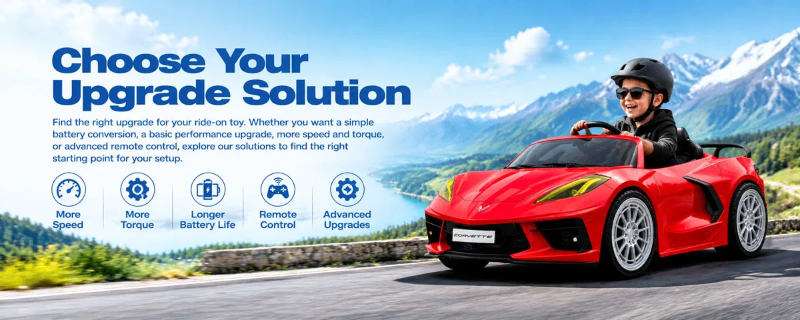
Find the right upgrade for your ride-on toy. Start with your performance goals, battery voltage, motor model, and installation preferences. Compare the options below, then check the product details to confirm compatibility.
H2: Not Sure Which Upgrade Is Right for You?
Before choosing a kit, check your battery voltage, motor model, existing wiring, and the kind of performance you want. If you are unsure, contact us with photos of your battery, motor, and existing controller.
Contact Us for Help Choosing→Contact us using the contact information at the bottom of the page.
Solution 1 :Battery Replacement Solution— Buck Converter
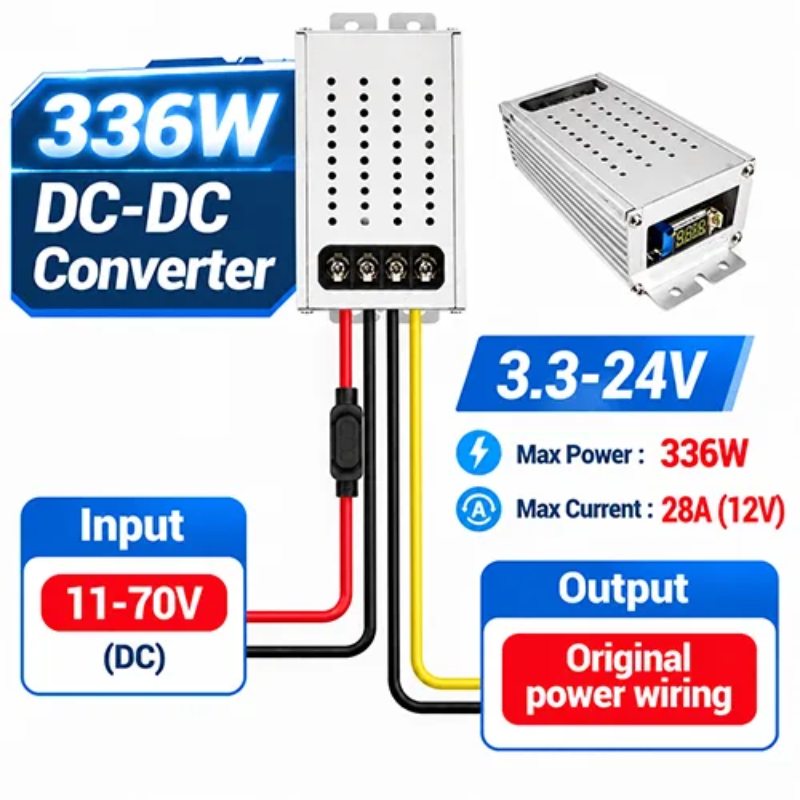 |
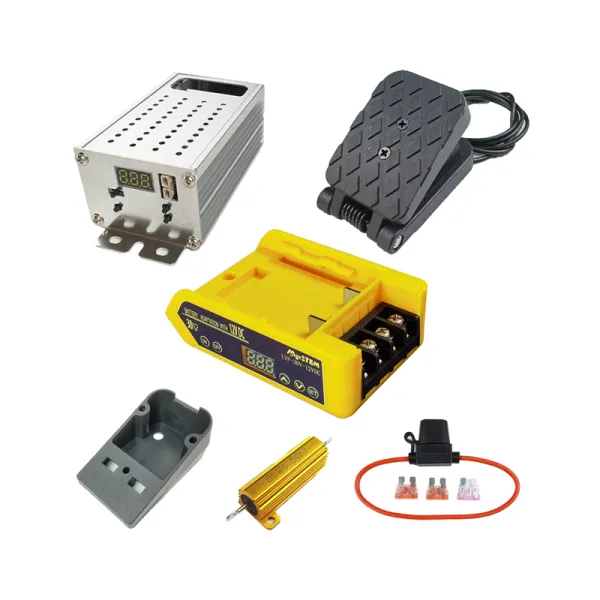
Introduction: This solution is ideal for anyone whose child’s ride-on toy has stopped working due to a failed battery and wants to get it running again using a compatible battery they already have at home. Plus, when the ride-on toy isn’t being used, the DC-DC converter can be repurposed for a variety of other applications. This DC to DC step-down converter supports an input voltage of 11~70V, output voltage from 3.3V to 24V, max power 336W, max current 28A. For 12V output, the output voltage must be at least 2V lower than the input voltage. |
Key advantages:
✅ Simple Power Wheels Mod Upgrade
✅ No new batteries required
✅ Reuse your existing power tool lithium batteries
✅ Put Your Spare Battery to Work
Limitations / things to check:
-
No improvement in vehicle performance. The original functions remain unchanged; only the power source is replaced.
-
Compatibility checks are required for connector polarity, wiring, installation space, and converter heat dissipation.
Best for:
-
Replacing a failed Power Wheels battery with a compatible 11–70V battery.
-
DIY Power Wheels modifications and other DC power applications.
Important: Confirm battery voltage, converter input/output range, current rating, connector polarity, wiring, and cooling requirements before ordering
| Solution 1 Product link: | View Battery Conversion Products→ |  |
Solution 2 :Basic Performance Upgrade — PWM2.0A
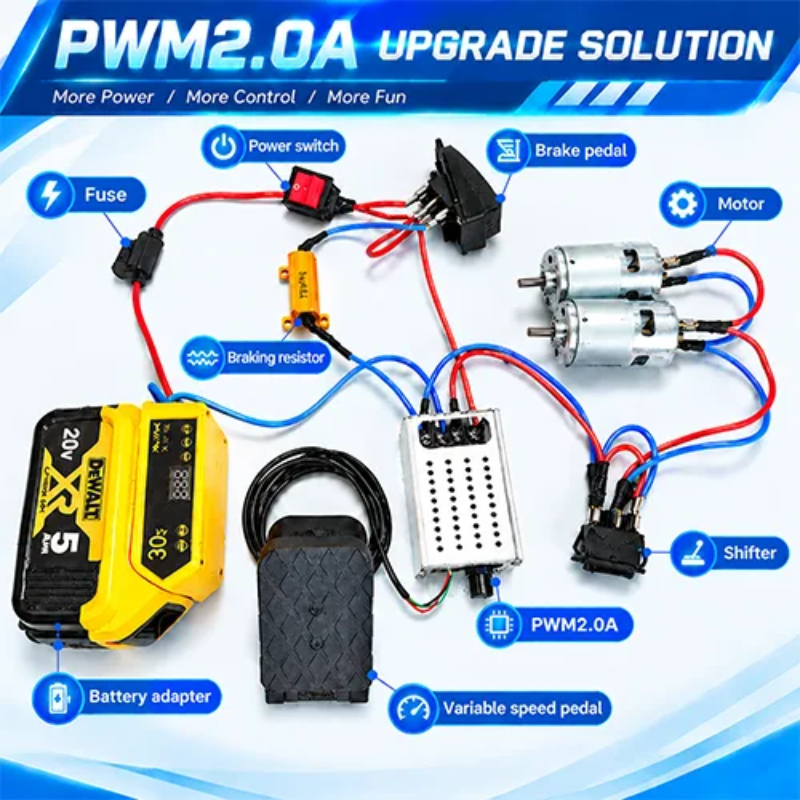 |
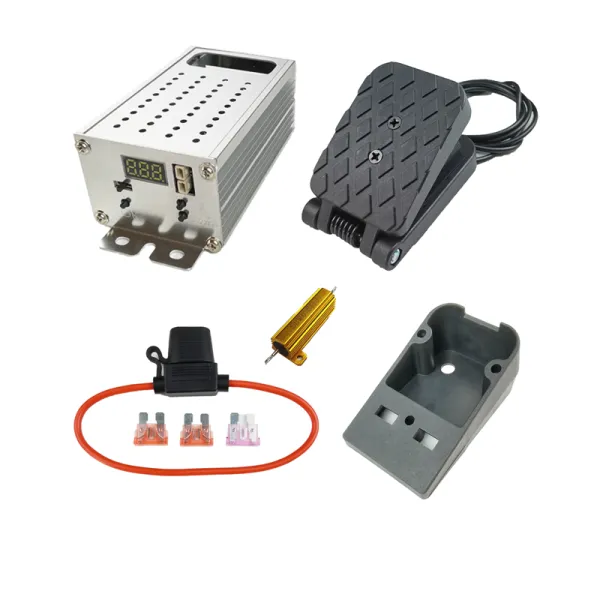
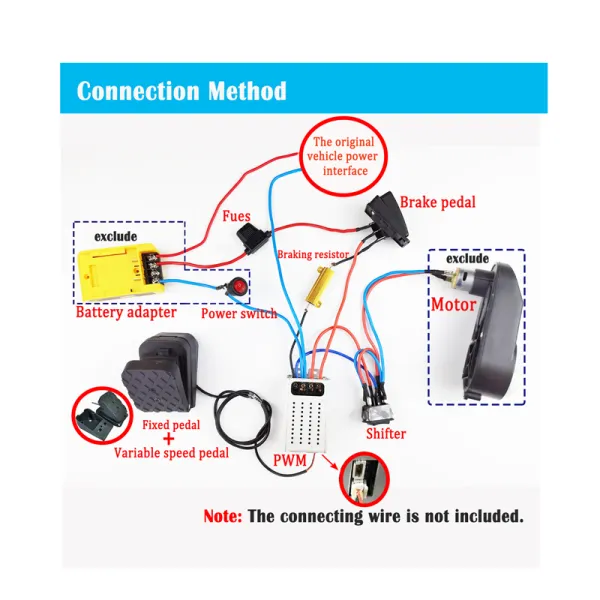
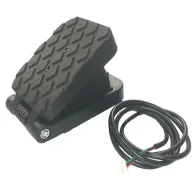
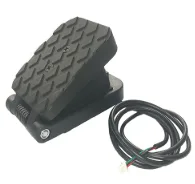
Introduction: The PWM2.0A upgrade is intended as a beginner-friendly starting point for users who want a modest performance improvement on a compatible ride-on toy. This PWM2.0A solution: 9–70V, 35A peak, compatible with stock motors, adjustable max output ratio. Two modes: No-pedal (3s power-on soft start only, no soft stop); Throttle pedal (soft start + soft stop), 3-pin brake switch pedal for braking.
|
Key advantages:
✅ Supports higher voltage input, stepless variable speed, 3-second soft start and automatic overcurrent protection.
✅ Adjustable speed and total output ratio; slightly faster speed than the original vehicle.
✅ Low cost to get started.
✅ Upgrade the entire control system for your faulty vehicle for a driving experience closer to a real car
Limitations / things to check:
The overall power is relatively low, max 35A; no low-voltage protection, and soft start & soft stop functions are non-adjustable.
The actual performance gain depends on the vehicle, battery, motor, controller and gearbox setup.
Best for:
Designed for users looking for a basic performance upgrade on compatible vehicles, PWM2.0A works with your vehicle’s original motor to deliver a more engaging driving experience with controllable speed. Before purchasing, please confirm that your vehicle’s configuration meets the official PWM2.0A specifications.
Important: When powered on, the PWM module checks for a throttle input signal. If an input voltage of ≥ 0.3 V is detected, the module defaults to throttle mode. If no throttle input signal is detected, the module defaults to no-throttle mode.
| Solution 2 Product link: | View Battery Conversion Products→ |  |
 |
 |
Solution 3 :Advanced Upgrade Kit — PWM 2.0B
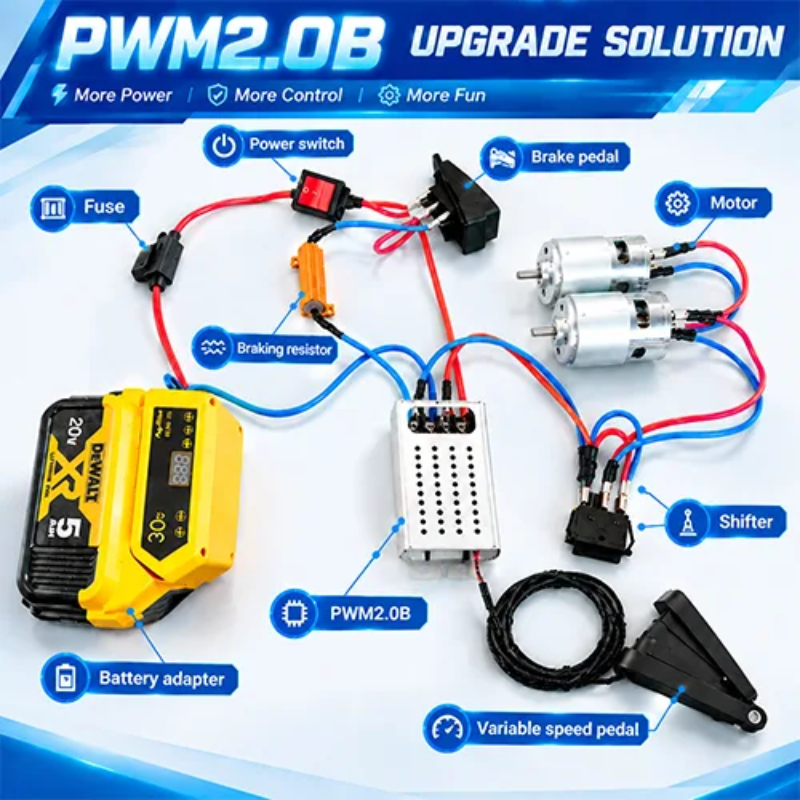 |
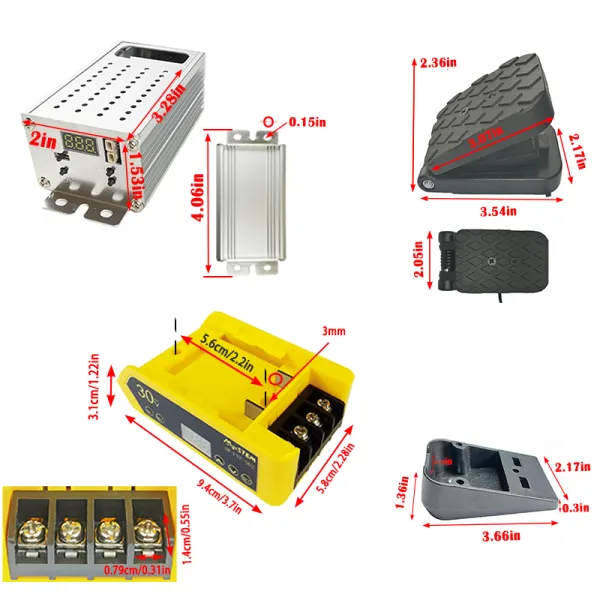
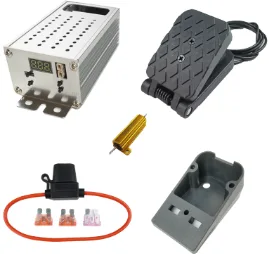
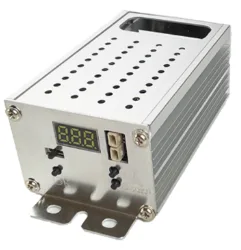
Introduction: PWM 2.0B is designed for users who want greater control over their ride-on toy’s speed and an enhanced driving experience. With continuously variable speed control and throttle pedal operation, it offers a more engaging and customizable driving experience beyond a basic upgrade. The PWM 2.0B solution supports 9–70V operation with a peak current of 40A. It features continuously variable speed control, voltage display, low-voltage protection, overcurrent protection, and adjustable soft-start and soft-stop times from 0.1 to 30 seconds. It is compatible with 755-size motors and smaller. Two operating modes are available: no-pedal mode and throttle pedal mode. In no-pedal mode, soft start is activated each time the module is powered on, but soft stop is not supported. In throttle pedal mode, both soft start and soft stop are supported. |
Key advantages:
✅ Delivers higher power to your ride-on toy, with peak current up to 40A for faster driving speeds.
✅ Features continuously variable speed control, voltage display, low-voltage protection, and selectable overcurrent protection.
✅ Low upfront cost, an easy entry-level upgrade, and excellent value for money.
✅ Upgrades the vehicle’s entire control system for a faster, more exciting driving experience.
Limitations / things to check:
The total power capacity may not be sufficient for racing applications. Under heavy loads, multiple high-power motors may trigger overcurrent protection when driving uphill, potentially causing the controller to burn out in severe cases.
The actual performance gain depends on the vehicle, battery, motor, controller and gearbox setup.
Best for:
PWM2.0B is designed for users who want higher speeds and a more flexible driving experience. Its low-voltage protection helps prevent battery damage caused by over-discharge, and it is compatible with 755-size motors and smaller. With adjustable soft-start and soft-stop settings, the vehicle can accelerate and decelerate more smoothly, delivering a more engaging driving experience.
Important: When powered on, the PWM module checks for a throttle input signal. If an input voltage of ≥ 0.3 V is detected, the module defaults to throttle mode. If no throttle input signal is detected, the module defaults to no-throttle mode.
| Solution 3 Product link: | View Battery Conversion Products→ | 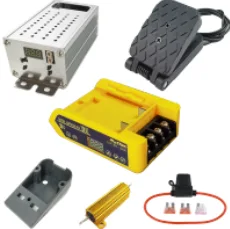 |
 |
 |
 |
|
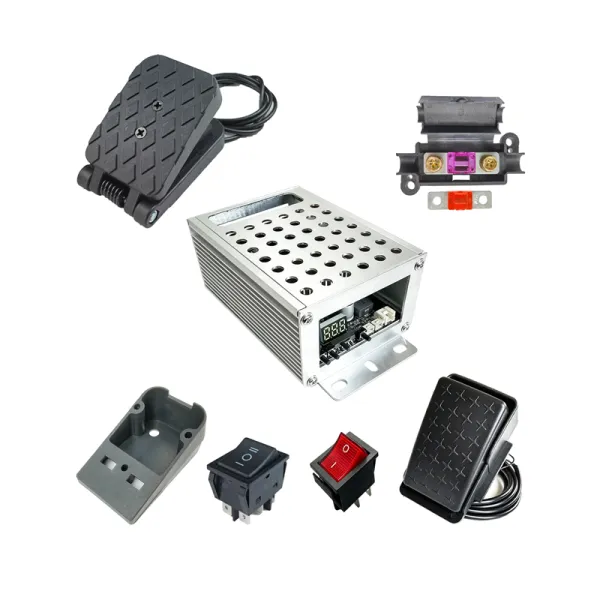
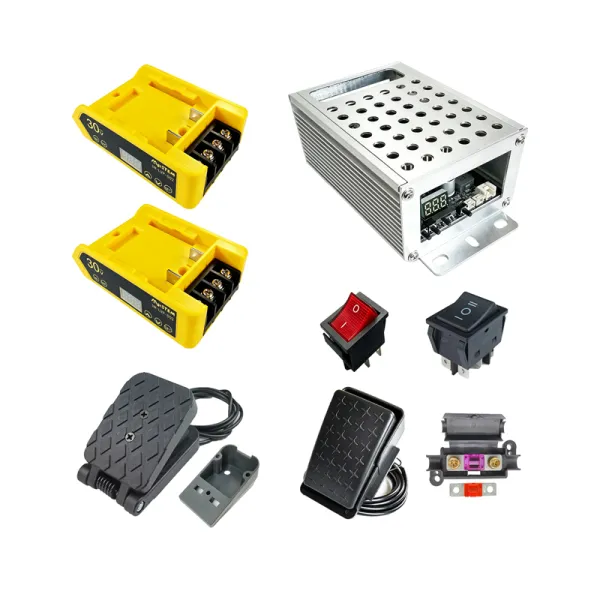
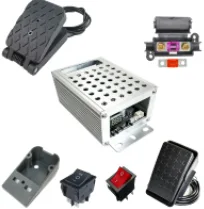
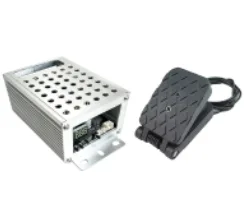
Solution 4 :High-Speed Upgrade Kit — PWM 3.0
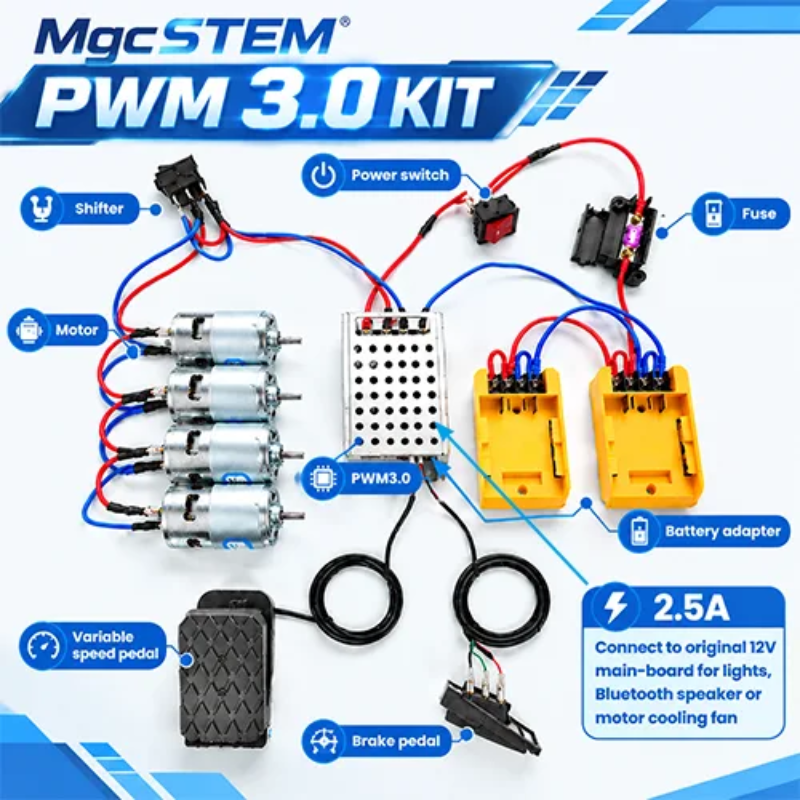 |
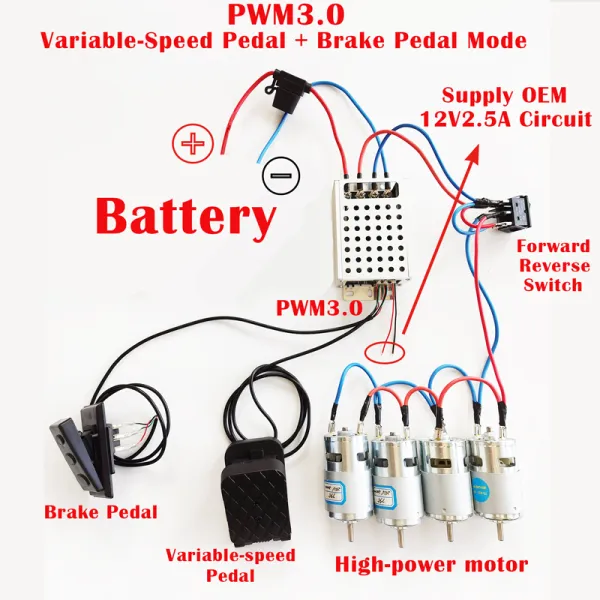
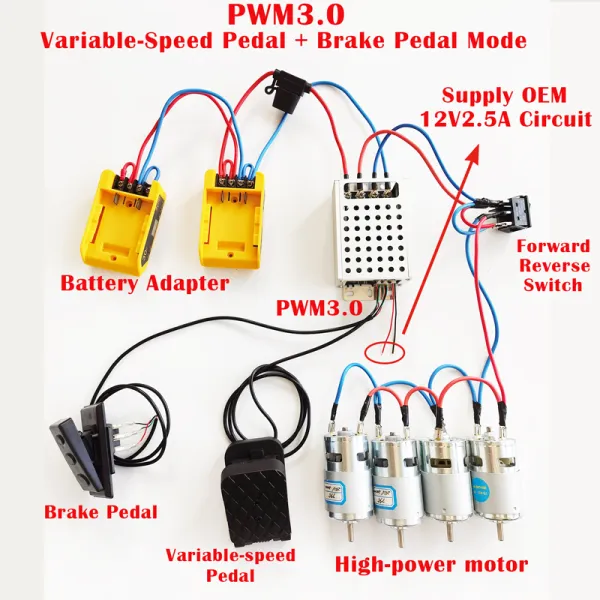
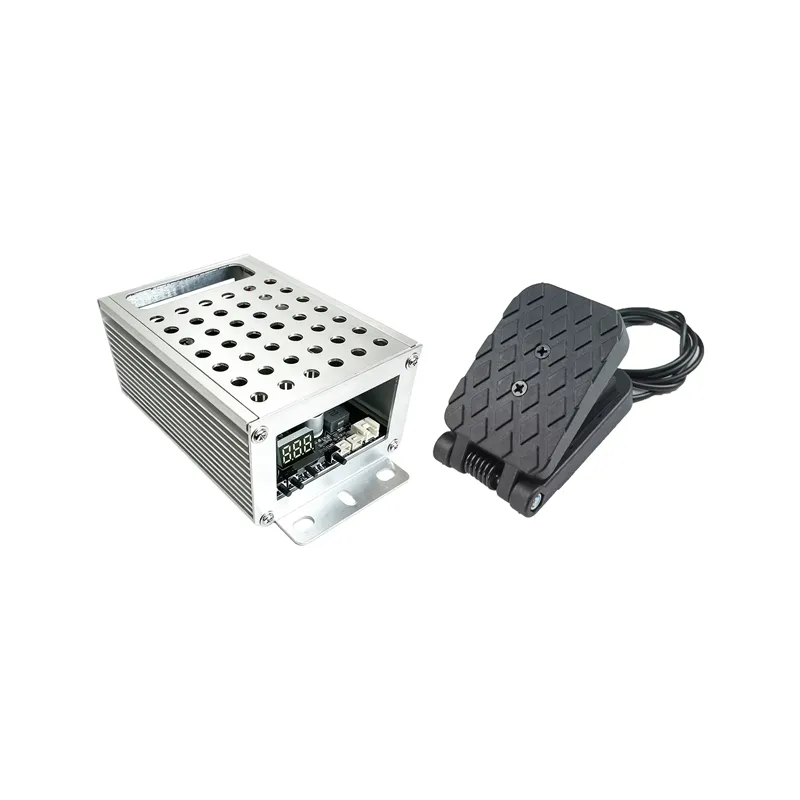
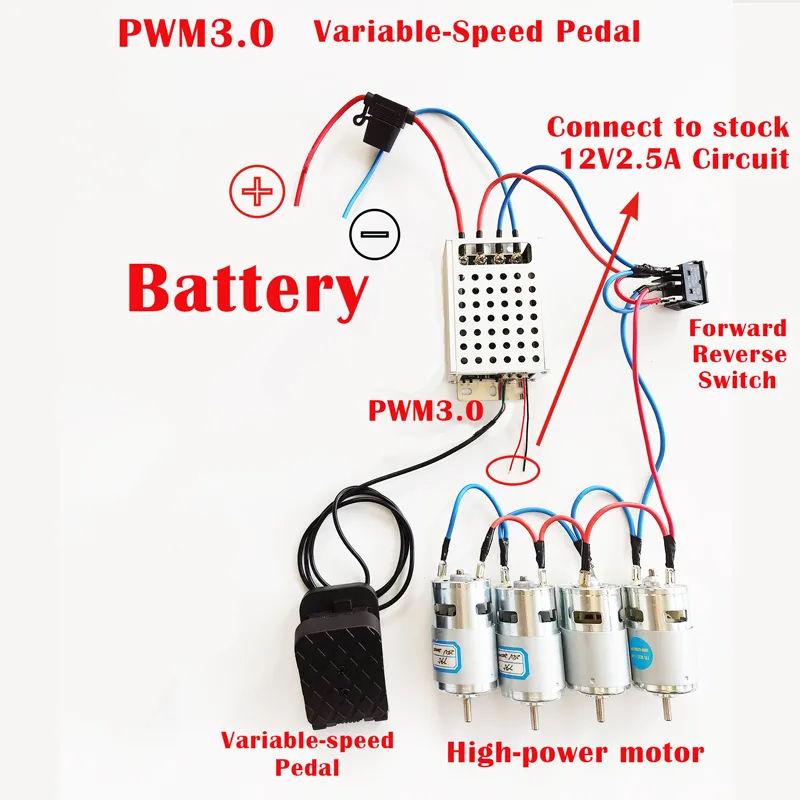
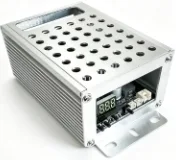
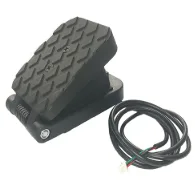
Introduction: PWM 3.0 is designed for high-performance ride-on toy upgrades and straight-line racing. Compatible with 997, 895, 795, 775, and smaller motors, it supports 13–77.5V input and up to 120A peak current. Features include continuously variable speed control, adjustable 0–30 second soft start and soft stop, selectable overcurrent protection, built-in electronic braking, and a cooling fan. It also includes low-voltage protection, voltage display, three status indicator lights, and a 12V 2.5A power output. PWM 3.0 is an ideal upgrade for users seeking greater performance and more advanced driving control. |
Key advantages:
✅ Delivers significantly higher power, with peak current up to 120A, for high-performance upgrades and straight-line racing applications.
✅ Features continuously variable speed control, voltage display, low-voltage protection, selectable overcurrent protection, and adjustable soft start and soft stop from 0–30 seconds.
✅ The 12V 2.5A output interface provides 12V power for vehicle lights, Bluetooth speakers, and motor cooling fans.
✅ Built-in electronic braking and a cooling fan provide enhanced braking control and improved heat management during operation.
✅ Upgrades the vehicle’s entire control system for stronger power delivery, making it a cost-effective choice for performance upgrades.
Limitations / things to check:
When multiple high-power motors are used under heavy loads, such as on uphill sections or in straight-line racing, the forward/reverse switch must be capable of handling high current demands.
Actual performance gains depend on the vehicle, battery, motors, controller, and gearbox configuration.
Best for:
Compatible with 997, 895, 795, 775, and smaller motors, PWM 3.0 is designed for ride-on toy users seeking higher performance, greater power output, and enhanced capabilities for straight-line racing. It supports up to 120A peak current and features built-in electronic braking and adjustable soft-start and soft-stop functions, delivering a more powerful and controlled driving experience.
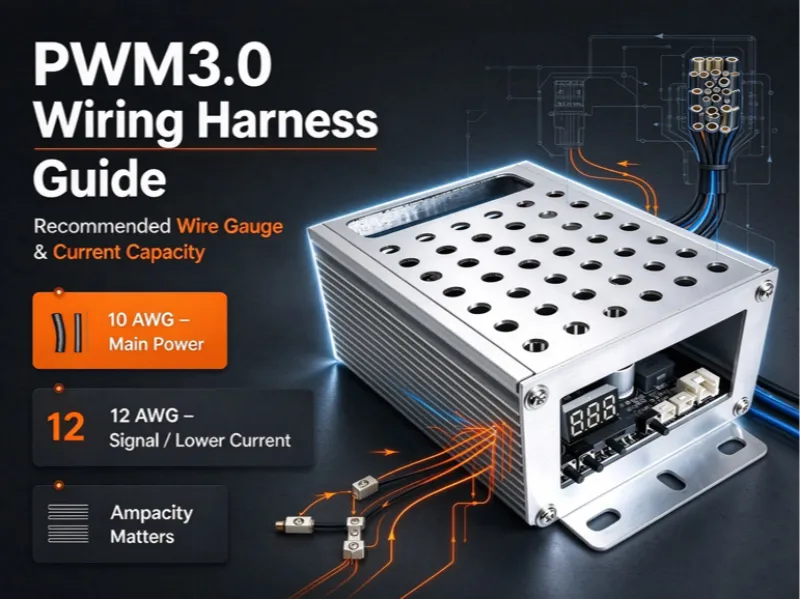
Important: For multiple high-power motors operating under heavy loads, such as uphill driving or straight-line racing, 10 AWG wiring is recommended. PWM 3.0 operates at 13–77.5V. A 12V power supply is insufficient for normal operation.
| Solution 4 Product link: | View Battery Conversion Products→ | 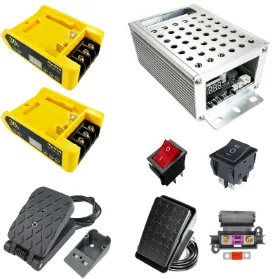 |
 |
 |
 |
 |
|
Solution 5 :Easy-Install High-Speed Kit — PWM3.0B
|
Introduction:
|
Key advantages:
Limitations / things to check:
The actual performance gain depends on the vehicle, battery, motor, controller and gearbox setup.
Best for:
Important:
| Solution 5 Product link: | View Battery Conversion Products→ |
Solution 6 :Premium Remote-Control Upgrade — PWM4.0
|
Introduction:
|
Key advantages:
Limitations / things to check:
The actual performance gain depends on the vehicle, battery, motor, controller and gearbox setup.
Best for:
Important:
| Solution 6 Product link: | View Battery Conversion Products→ |
FAQ:
How Do I Choose the Right Upgrade?
Start with your upgrade goal, battery voltage, motor model, and installation preferences. Then compare the product specifications. Contact us if you need help.
Can I Choose a Controller Based on Voltage Alone?
No. Voltage is only one factor. You should also check current requirements, motor specifications, connectors, and the specific requirements of your intended application.
What Is the Difference Between PWM3.0 and PWM3.0B?
PWM 3.0 uses a separate forward/reverse shifter that carries high current. In contrast, PWM 3.0B features built-in direction switching, so the shifter only needs to transmit a low-current control signal instead of carrying high current. This design also makes installation and operation much easier, eliminating the need to purchase an expensive high-current forward/reverse switch.
Do I Need to Replace My Existing Battery?
Not necessarily. It depends on the voltage supported by your current battery and the upgrade kit you choose. You should also consider your overall upgrade goals when deciding whether to replace the battery.
What If I Don't Know My Motor Model or Battery Voltage?
Check the labels on your battery and motor, or contact us with clear photos of the labels, connectors, and existing controller.
Is Every Kit Compatible with Every Ride-On Toy?
No. Compatibility depends on the vehicle, battery, motor, wiring, connectors, and kit specifications. Verify these details before ordering.